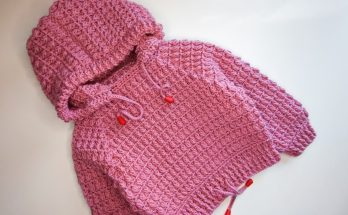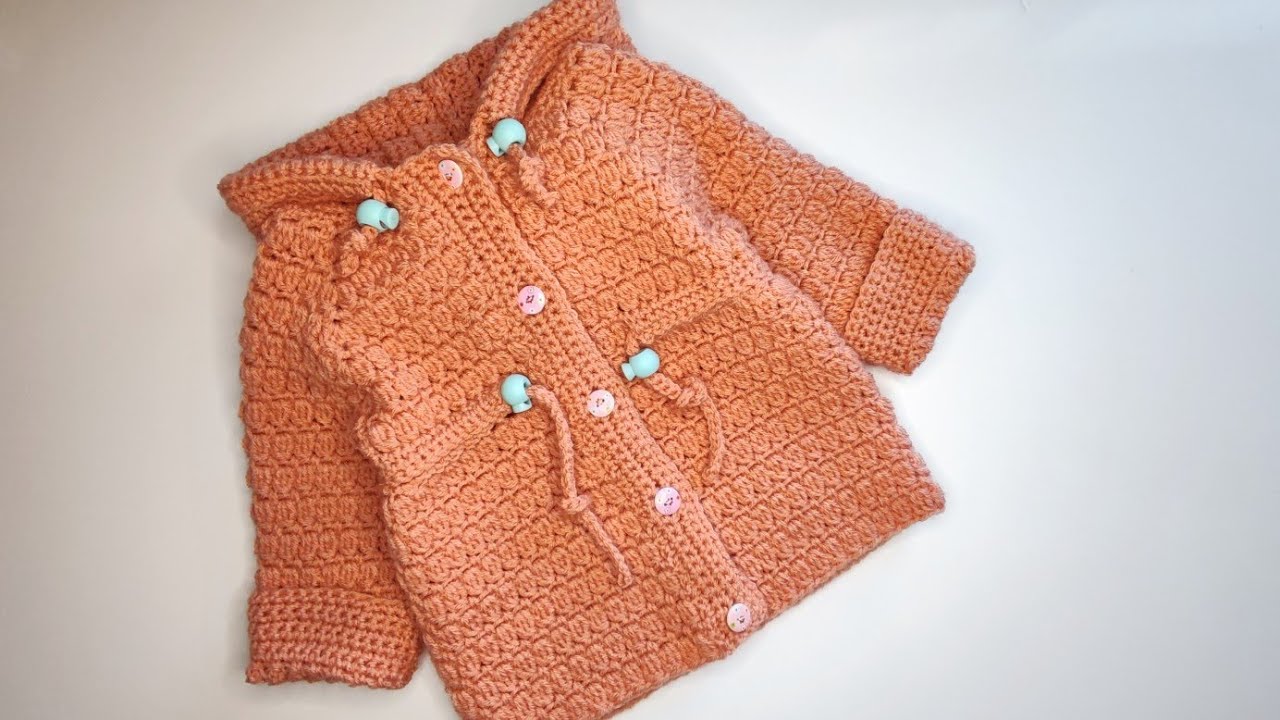
Here is a detailed, step-by-step guide to crocheting a cute and cozy “Raincoat” Baby Hoodie
This design is inspired by a classic raincoat look — slightly A-line shape, hood, front buttons (or zipper), and optional little pockets. It’s perfect for layering in cool or damp weather.
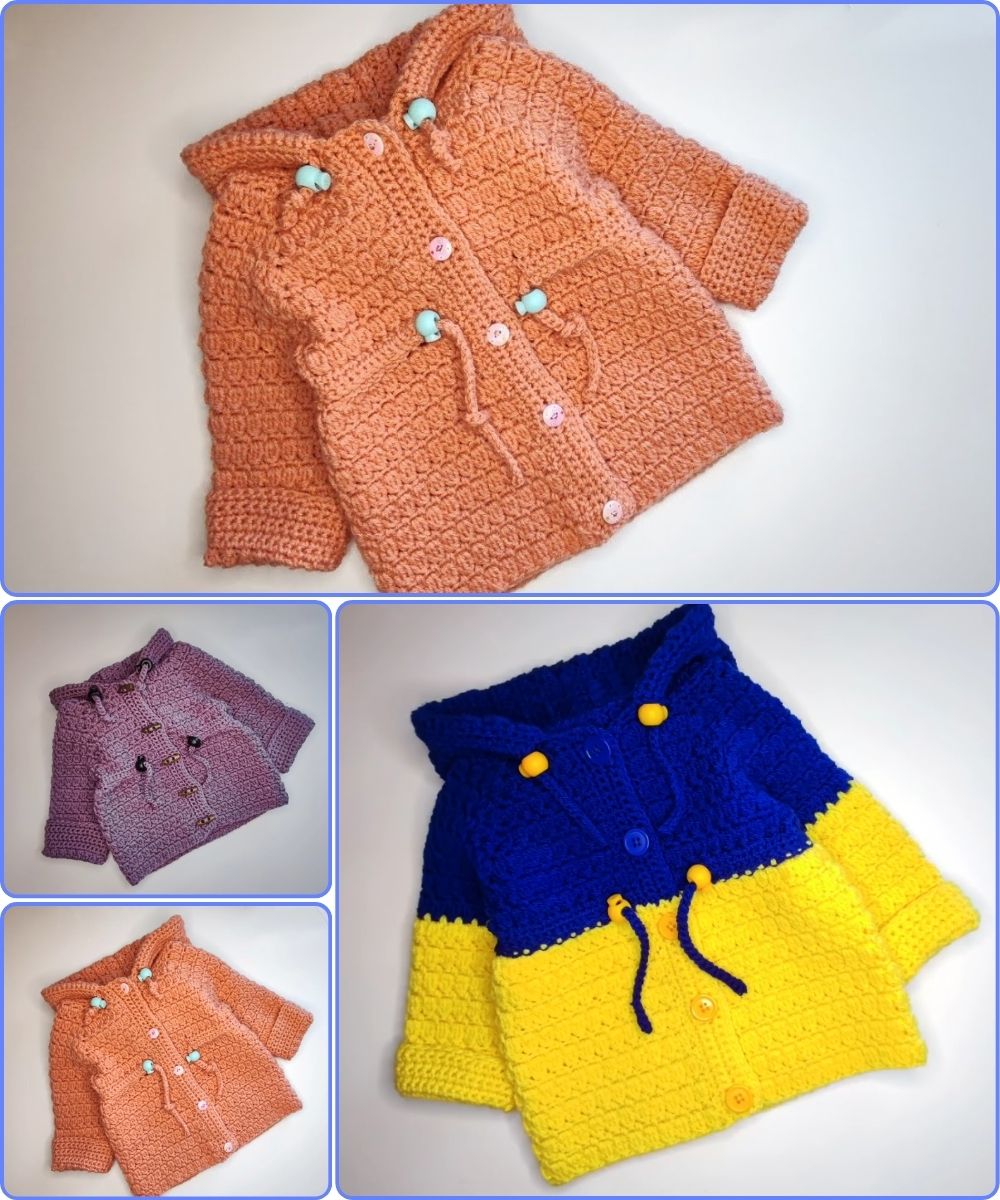
How to Crochet a “Raincoat” Baby Hoodie
Materials
- Yarn: DK or Worsted weight (soft acrylic, cotton blend, or lightweight wool)
Approx. 600–900 yards depending on size - Hook:
- 4.0 mm (G/6) for DK
- 5.0 mm (H/8) for worsted
- Stitch markers (4 minimum)
- Yarn needle
- Scissors
- 4–6 buttons or a zipper
- Optional: drawstring cord
Suggested Sizes
- 0–3 months
- 3–6 months
- 6–12 months
- 1–2 years
(Adjust stitch counts based on chest measurement and gauge.)
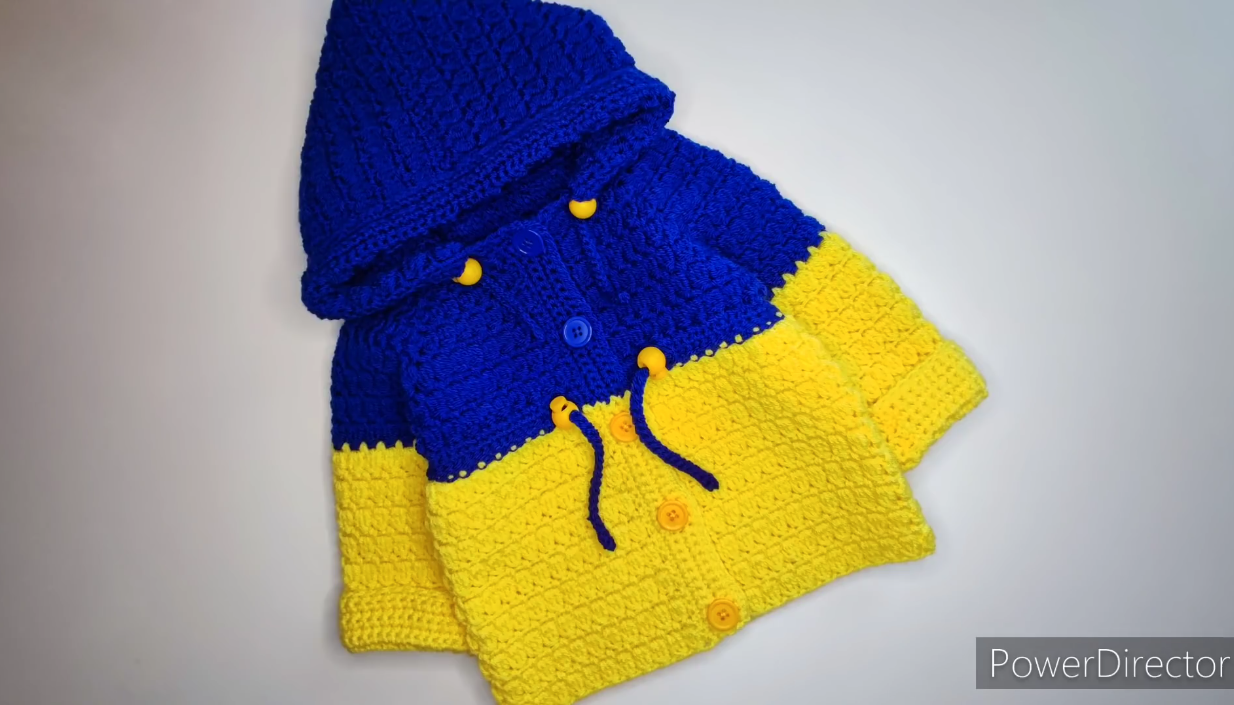
Construction Overview
This hoodie is worked:
- Top-down from neckline
- Raglan increases for shaping
- Separate sleeves
- Slight flare for raincoat look
- Add hood
- Add sleeves
- Add button band or zipper
- Optional pockets
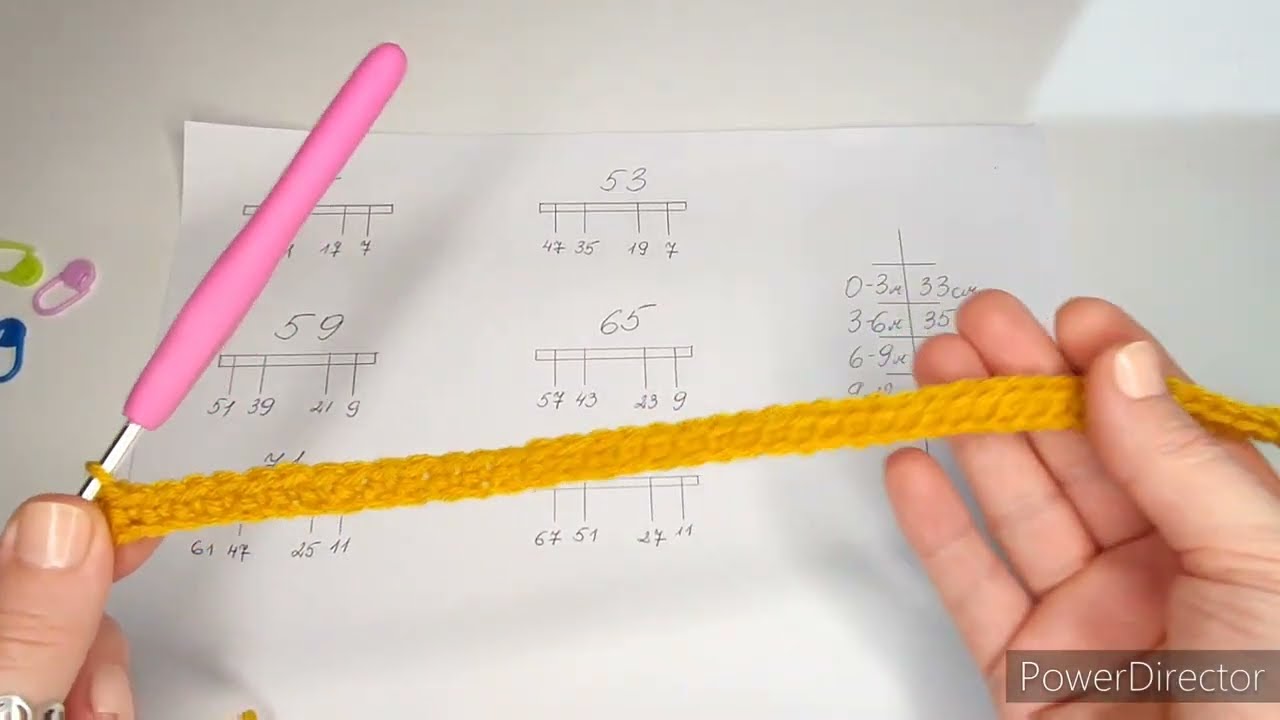
Step 1: Foundation Chain (Neckline)
Example (3–6 months):
Chain 60
Row 1:
dc in 3rd chain from hook
dc across
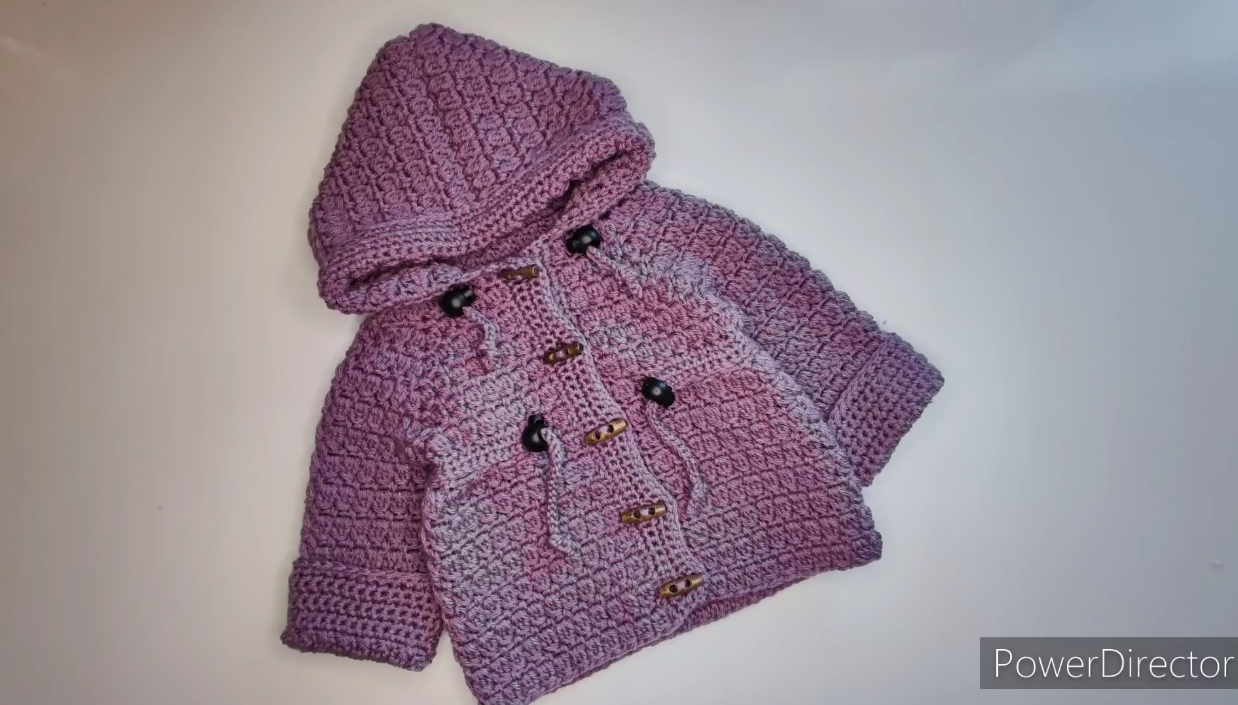
Divide for Raglan Sections
Example division:
- 9 stitches (front)
- 2 stitches (raglan)
- 14 stitches (sleeve)
- 2 stitches (raglan)
- 18 stitches (back)
- 2 stitches (raglan)
- 14 stitches (sleeve)
- 2 stitches (raglan)
- 9 stitches (front)
Place stitch markers at raglan sections.
Step 2: Raglan Increases (Yoke)
On each right-side row:
- dc to marker
- (dc, ch 1, dc) in raglan stitch
- repeat at each raglan
Turn and repeat.
Continue until yoke depth measures:
- 4–5 inches (baby sizes)
- 5–6 inches (toddler sizes)
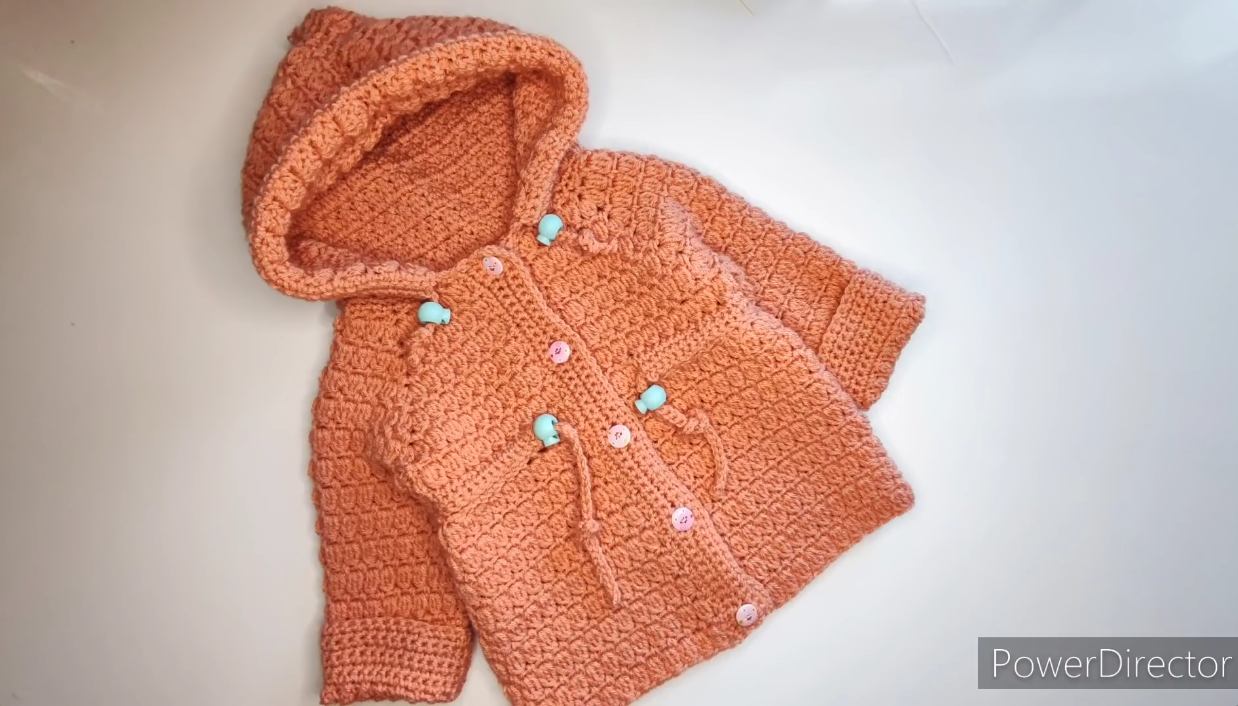
Step 3: Separate Sleeves
When yoke is deep enough:
- dc across first front
- Skip sleeve stitches
- Chain 2–4 for underarm
- dc across back
- Skip second sleeve
- Chain 2–4
- dc across final front
Now you are working body only.
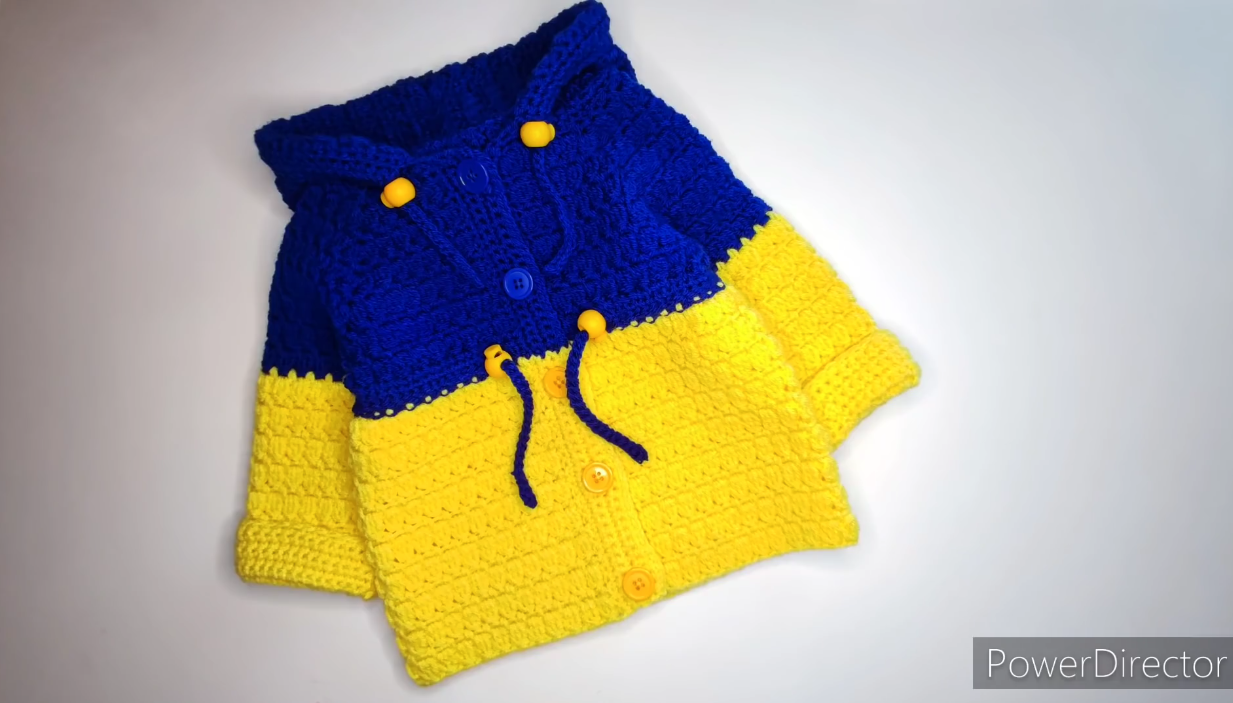
Step 4: Create the “Raincoat” Shape (A-Line Body)
To get the classic raincoat flare:
Increase gently every 2–3 rows:
Option 1 (Mild flare):
2 dc in every 6th stitch
Option 2 (More flare):
2 dc in every 4th stitch
Continue until coat reaches mid-thigh or desired length.
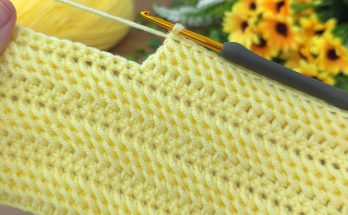
Step 5: Texture for Raincoat Look
For a smooth “coat” appearance:
- Work rows of hdc or dc for clean finish.
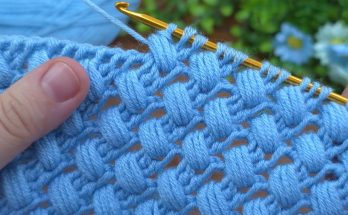
Optional light texture:
- Row 1: hdc
- Row 2: hdc in back loop only
- Repeat for subtle ribbed texture.
Avoid heavy cables — raincoat style looks better sleek and simple.
Step 6: Sleeves
Attach yarn at underarm.
Work in rounds:
- dc or hdc evenly around
Decrease every 4–5 rows if needed.
Finish with:
- 4 rows of FPdc/BPdc ribbing
OR - sc cuff
Repeat for second sleeve.
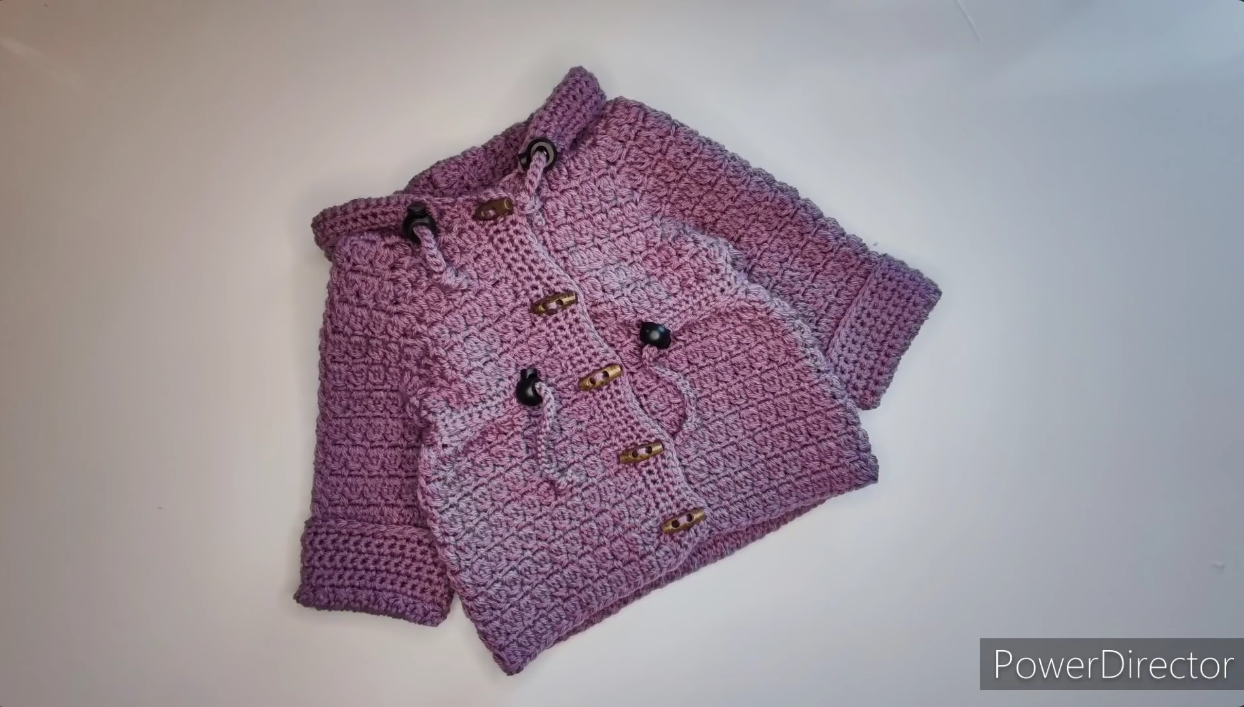
Step 7: Add the Hood
Attach yarn at neckline.
Work back and forth in rows across entire neckline.
- Row 1: dc across
- Continue until hood measures enough to fold over top of baby’s head.
Fold hood in half and seam the top closed.
Optional:
- Add small visor by working 1–2 short rows at front edge.
- Add drawstring cord through neckline row.
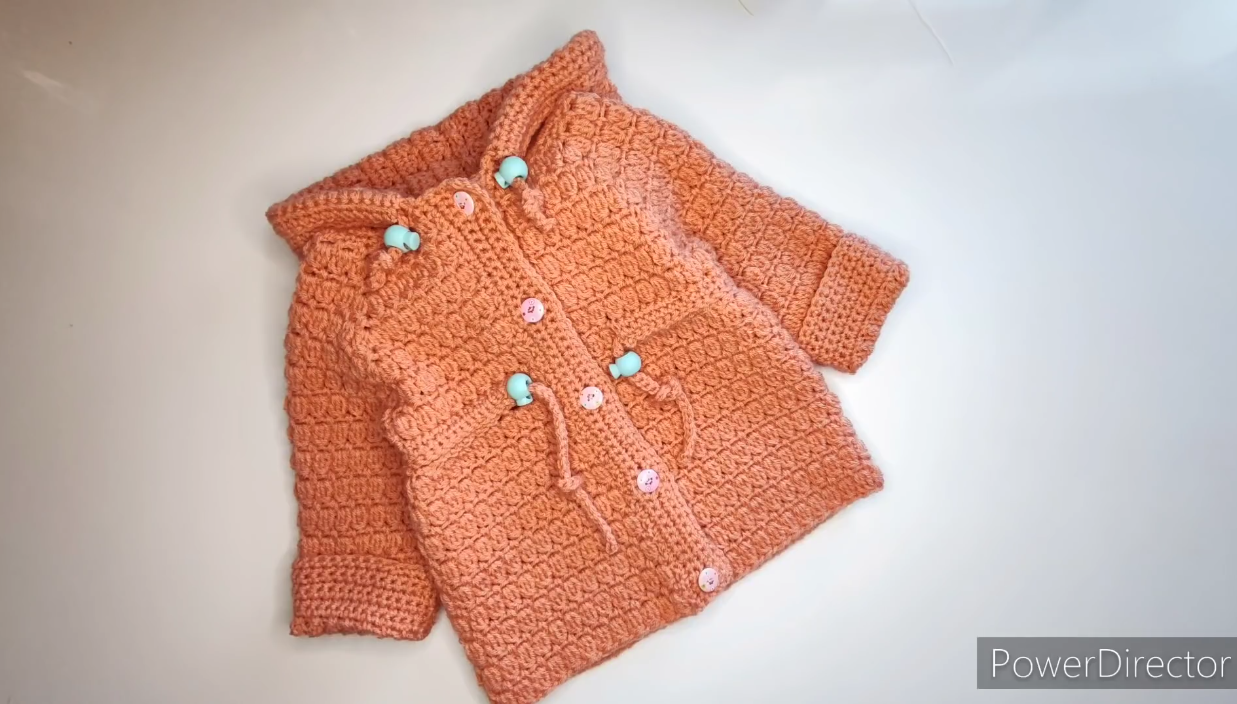
Step 8: Button Band or Zipper
Attach yarn to front edge.
Work 4–6 rows of sc or hdc evenly up one side, around hood edge, and down other side.
On one side:
Create buttonholes:
- ch 1–2
- skip same number of stitches
Sew buttons opposite holes.
OR
Sew zipper carefully using yarn needle and matching thread.
Optional: Add Pockets
Small Patch Pocket:
- Chain 12–16
- Work dc rows until square
- Sew onto lower front panels
Color Ideas for “Raincoat” Style
Classic raincoat colors:
- Mustard yellow
- Bright red
- Teal
- Navy
- Olive green
Add contrasting lining color for hood for extra style.
Size Adjustment Formula
- Measure chest circumference.
- Multiply by stitch gauge.
- Add 2–3 inches ease for layering.
- Divide into:
- 2 fronts
- 2 sleeves
- 1 back
- 4 raglan stitches
Always check gauge before starting.
Yarn Tips
Best yarn choices:
- Cotton blend (lightweight feel)
- Acrylic (easy wash)
- Superwash merino (soft + warm)
Avoid bulky yarn for small babies — coat becomes stiff.
Professional Finish Tips
- Keep tension consistent.
- Use stitch markers for raglan accuracy.
- Block lightly for even shape.
- Reinforce buttons securely.
- Add small inside tie for extra security.
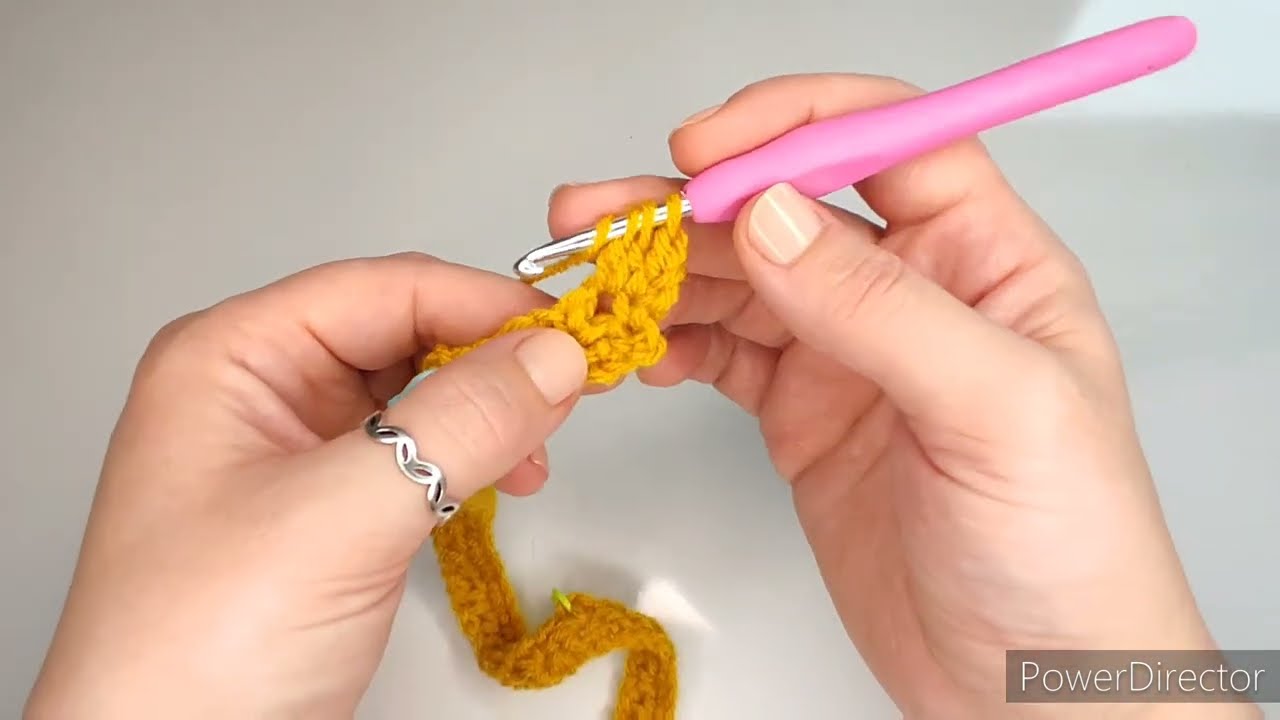
Watch tutorial: